Elderberries as Incense: A Qabbalistic Perspective
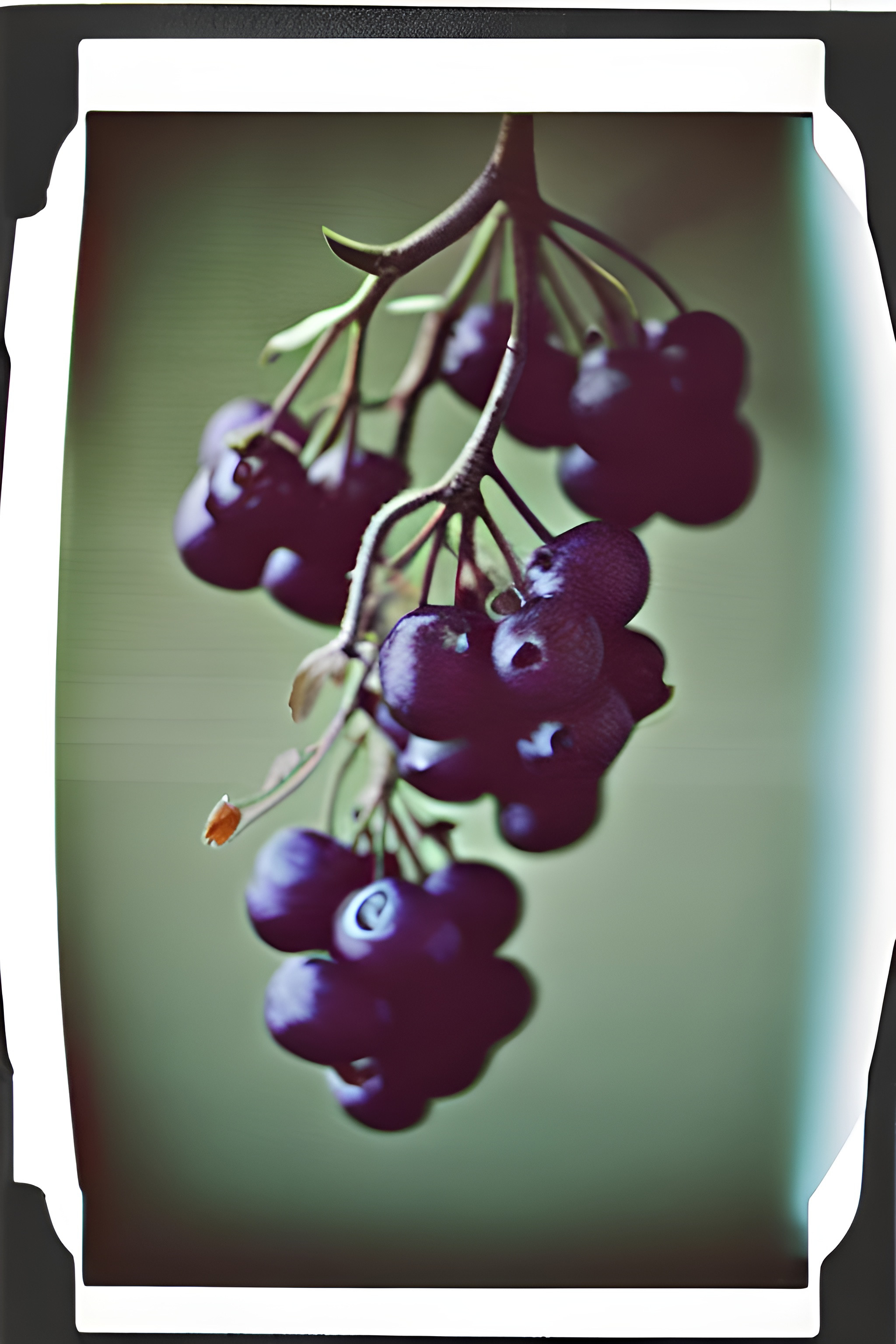
Strictly speaking, elderberries are not true berries, but stone fruits—small, dark vessels containing both flesh and seed, embodying a quiet duality.
This botanical nuance is more than a technicality when viewed through a Qabbalistic lens; it reflects a deeper principle: that what appears simple or singular often contains hidden layers, inner structures, and concealed essences waiting to be revealed.
Commonly referred to as lilac berries, elderberries are widely recognized for their use in juices and syrups, their deep black color and distinctive aroma signaling nourishment, protection, and vitality. Yet their role as incense opens an entirely different dimension—one that moves from the physical into the subtle, from consumption into transformation, from body into spirit.
The elder tree itself has long been regarded as a threshold being in European folklore—a guardian of liminal spaces, standing between worlds. In Qabbalistic thought, such a plant resonates strongly with the sephirah of Yesod, the sphere associated with the foundation, the subconscious, and the bridge between the visible and invisible realms. Yesod gathers, concentrates, and transmits energies, much like incense does when it carries material substance into fragrant vapor.
With due respect to tradition, the wood, bark, and flowers of the elder have already established their place in ritual and healing practices. Each part corresponds to a different level of manifestation: the wood to structure and endurance (Malkuth), the bark to protection and boundary (Gevurah), and the flowers to beauty and expansion (Tiferet). These aspects form a complete tree-symbolism, a living diagram of the Tree of Life itself.
After a long period of personal maturation—both practical and spiritual—the introduction of elderberries into incense work marks a significant deepening. The fruit represents culmination, the final expression of a cycle. In Qabbalah, this aligns with the idea of shefa, the divine flow that descends through the sephirot and ultimately crystallizes in the material world. The berry, dark and concentrated, holds within it the entire journey of the plant—from root to blossom to fruition.
When used as incense, elderberries release a scent that is rich, slightly bitter, and deeply grounding. This aroma can be understood as a call inward, a descent into the hidden layers of the self. In meditative practice, it supports introspection, shadow work, and the gentle unveiling of what lies beneath conscious awareness. It does not overwhelm; rather, it invites.
Symbolically, the transformation of elderberries through fire mirrors the alchemical process described in Qabbalistic teachings: the elevation of the physical through intention. The solid fruit becomes smoke, the dense becomes subtle, the hidden becomes revealed. This is the essence of spiritual עבודה (avodah)—the sacred work of refining and lifting.
There is also an important ethical dimension to this maturation. Gaining access to the berries is not merely a matter of harvesting, but of readiness. In Qabbalah, one does not approach deeper mysteries without preparation. The statement of “a long period of personal maturation” reflects this principle: that the practitioner must evolve alongside the materials they work with. Only then can the relationship be reciprocal rather than extractive.
In this sense, elderberries as incense are not just an addition to a collection—they are a threshold crossed. They signify a readiness to engage with deeper currents, to honor the full cycle of growth, and to participate consciously in the transformation of matter into spirit.
Thus, what began as a familiar fruit—known in kitchens and remedies—reveals itself as something far more profound.
In smoke, in scent, and in silence, elderberries become a medium through which the hidden structure of reality briefly makes itself known.


Comments
Post a Comment